
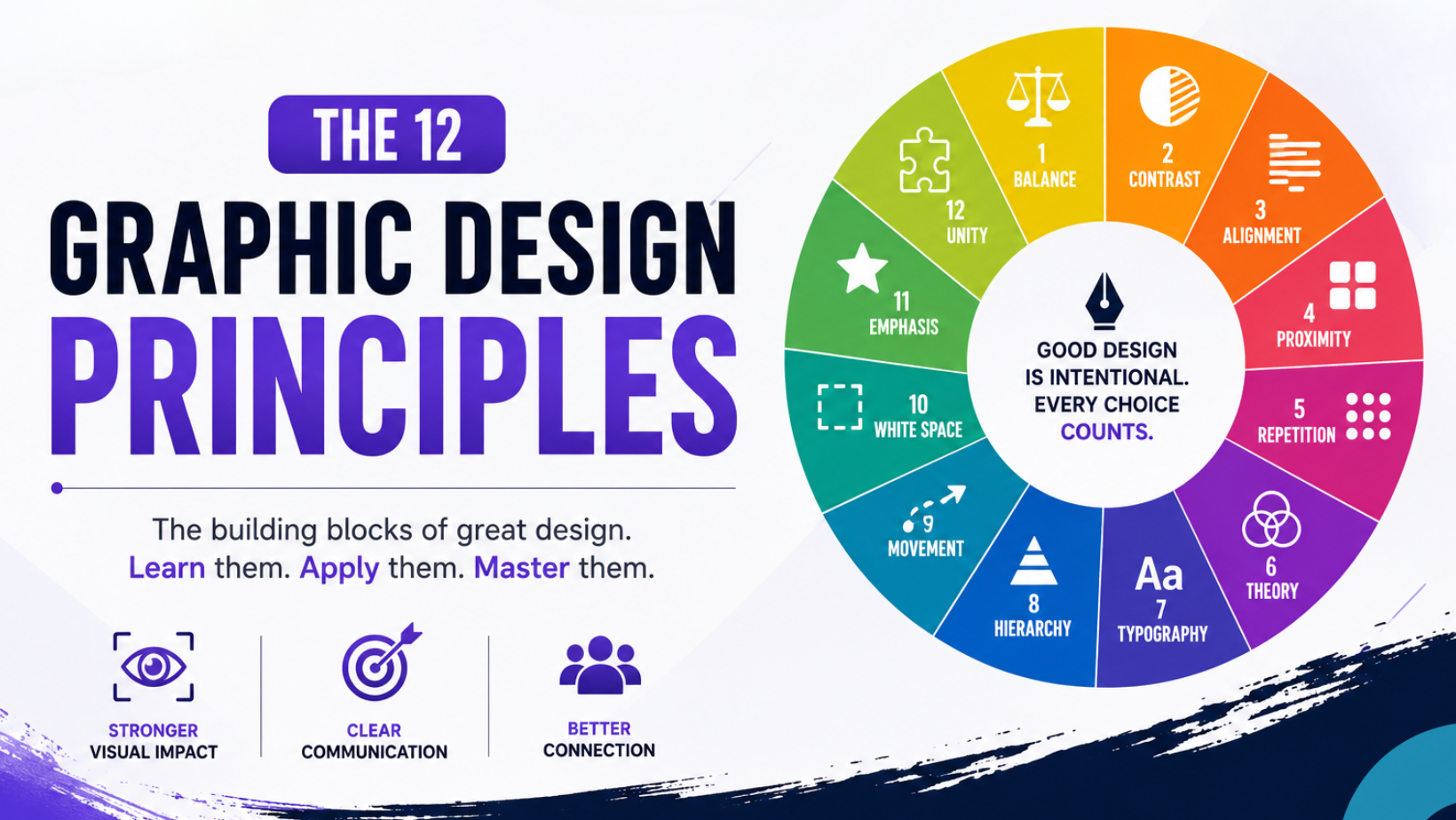
Graphic design is more than making things look good — it’s about creating visuals that communicate clearly, attract attention, and leave a lasting impression. Whether you’re designing for social media, websites, branding, marketing materials, or creative projects, understanding the core principles of design helps turn ideas into effective visuals.
Here are the 12 essential graphic design principles every creative should know:
1. Balance
Balance refers to the distribution of visual weight in a design. It creates stability and structure.
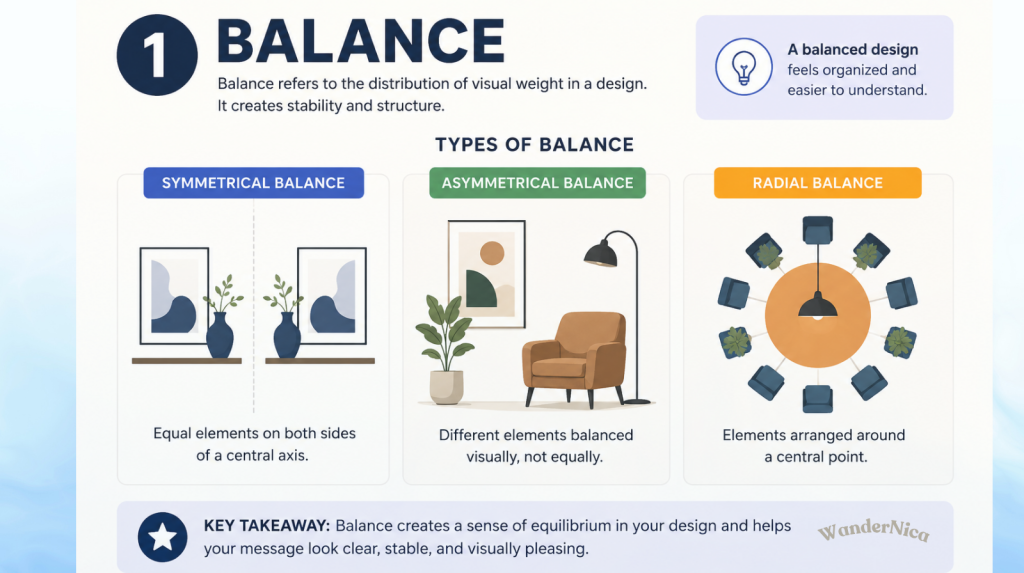
Types of Balance:
- Symmetrical Balance – equal elements on both sides
- Asymmetrical Balance – different elements balanced visually
- Radial Balance – elements arranged around a center point
A balanced design feels organized and easier to understand.
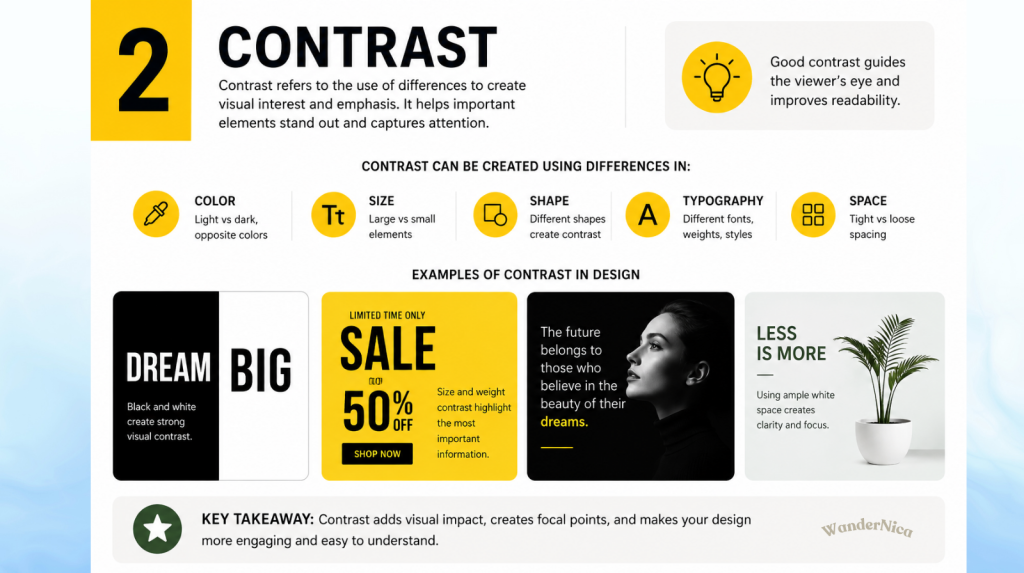
2. Contrast
Contrast helps important elements stand out by using differences in:
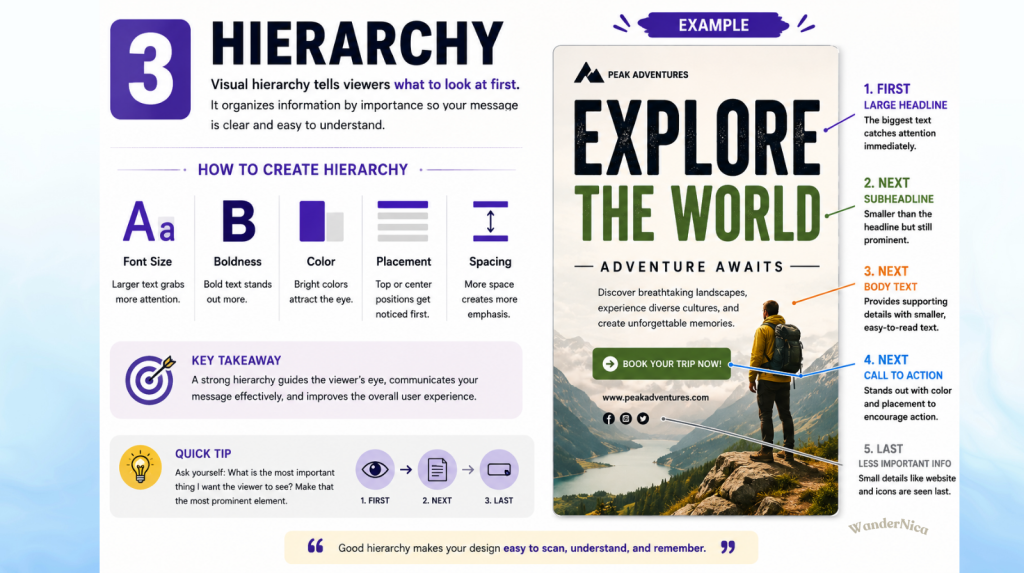
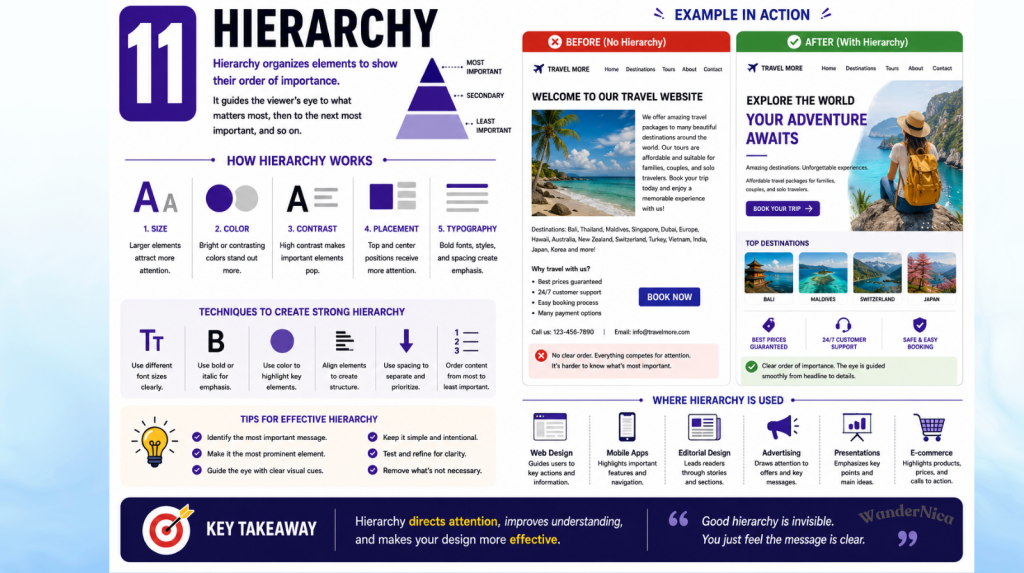
3. Hierarchy
Visual hierarchy tells viewers what to look at first.
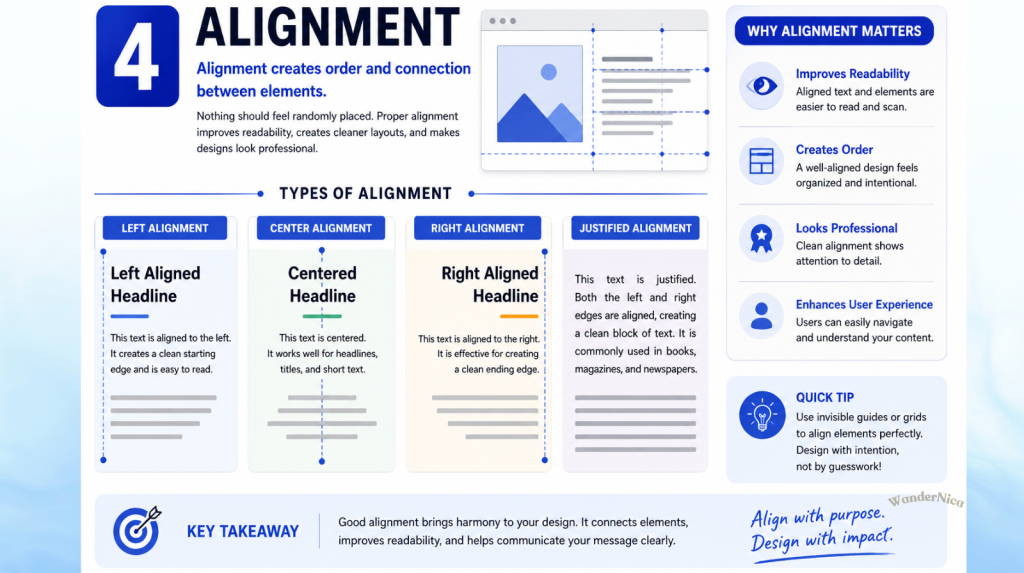
4. Alignment
Alignment creates order and connection between elements.
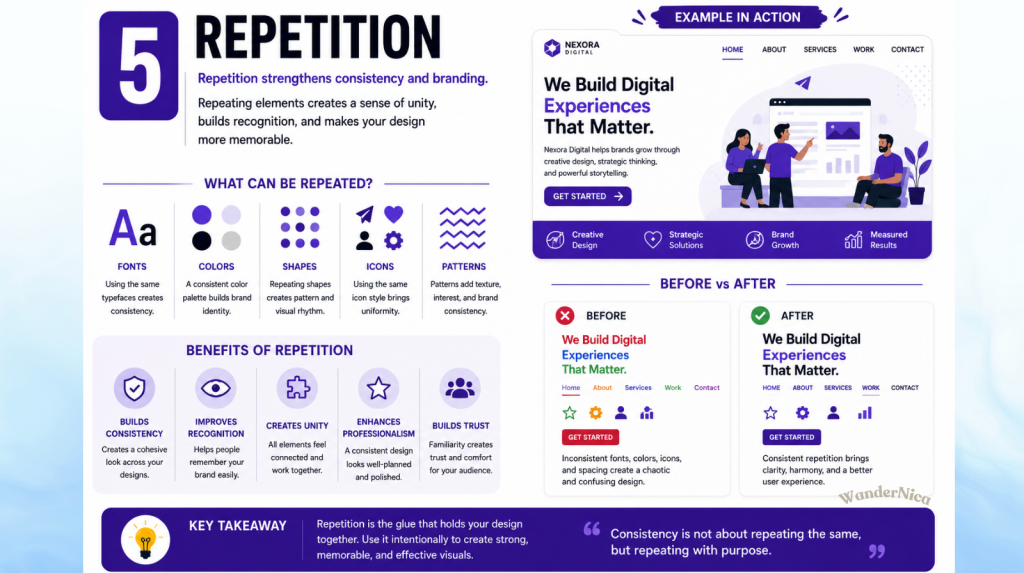
5. Repetition
Repetition strengthens consistency and branding.
6. Proximity
Related elements should be grouped.
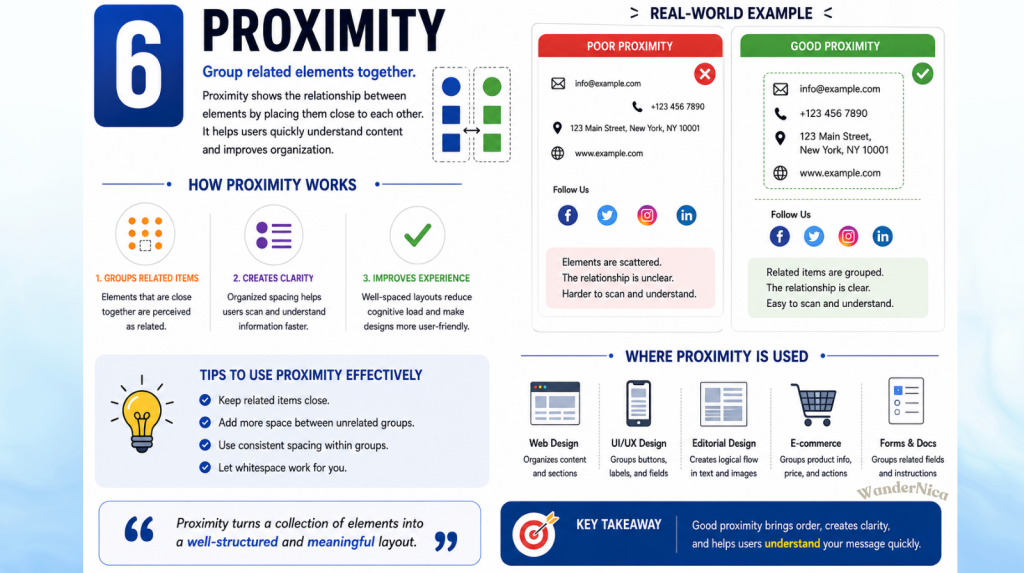
Proximity helps users quickly understand relationships between content and improves organization.
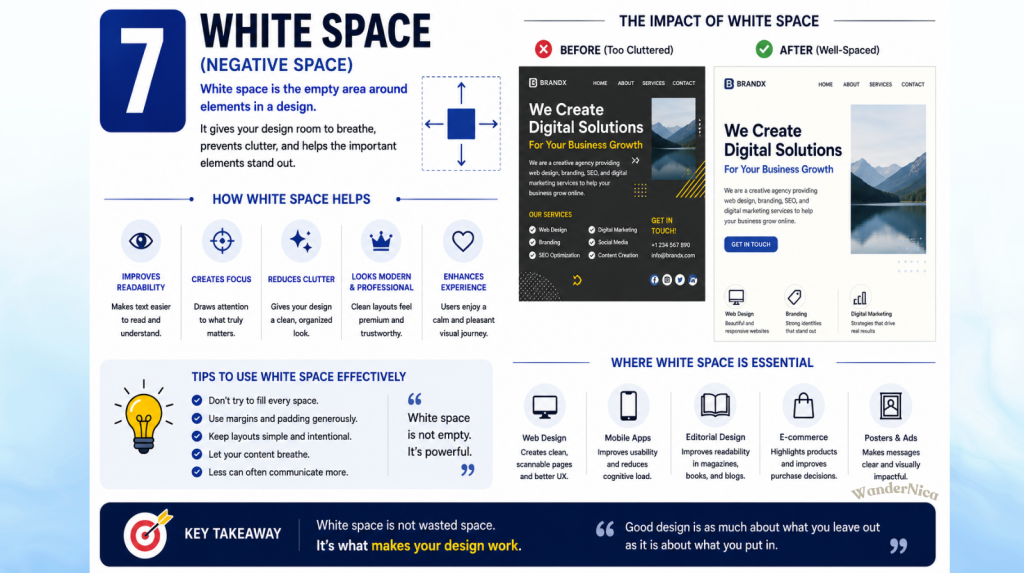
7. White Space (Negative Space)
White space is the empty area around elements.
It gives designs room to breathe and prevents clutter.
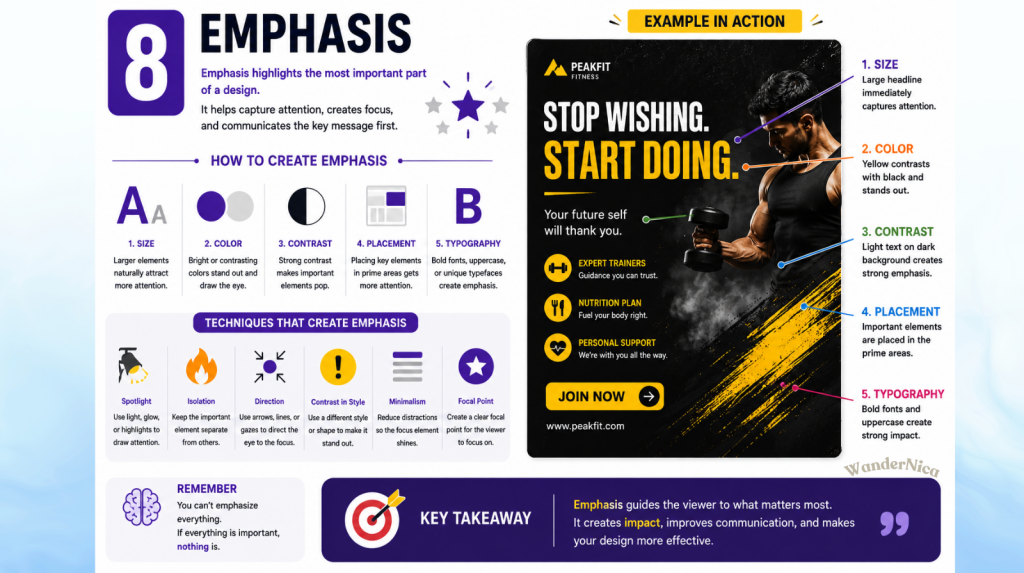
8. Emphasis
Emphasis highlights the most important part of a design.
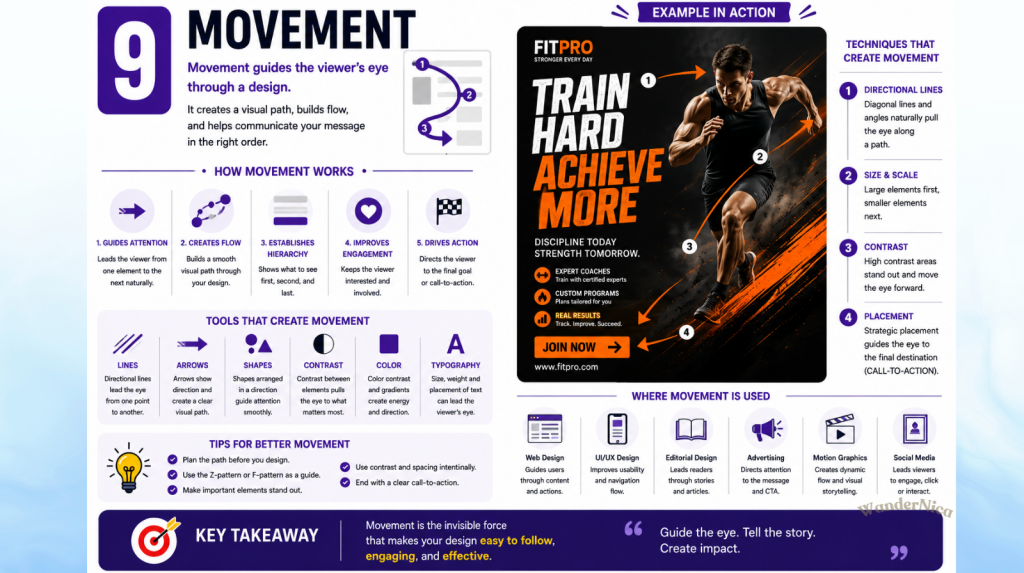
9. Movement
Movement guides the viewer’s eye through the design.
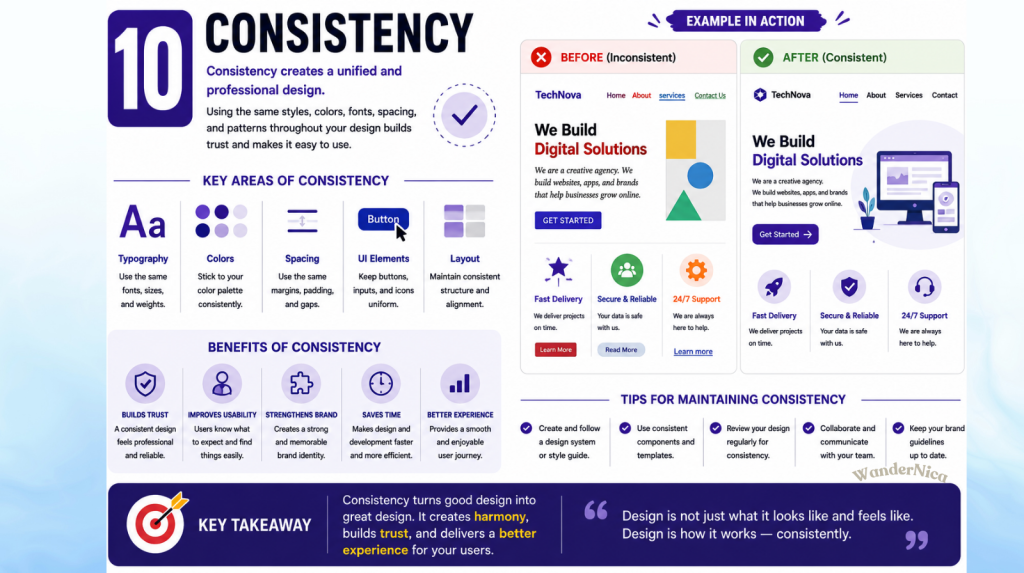
10. Proportion & Scale (Consistency)
Proportion refers to the relationship between elements in size and shape.
Scale creates impact and importance.
11. Unity (Hierachy)
Unity ensures all parts of the design work together cohesively.
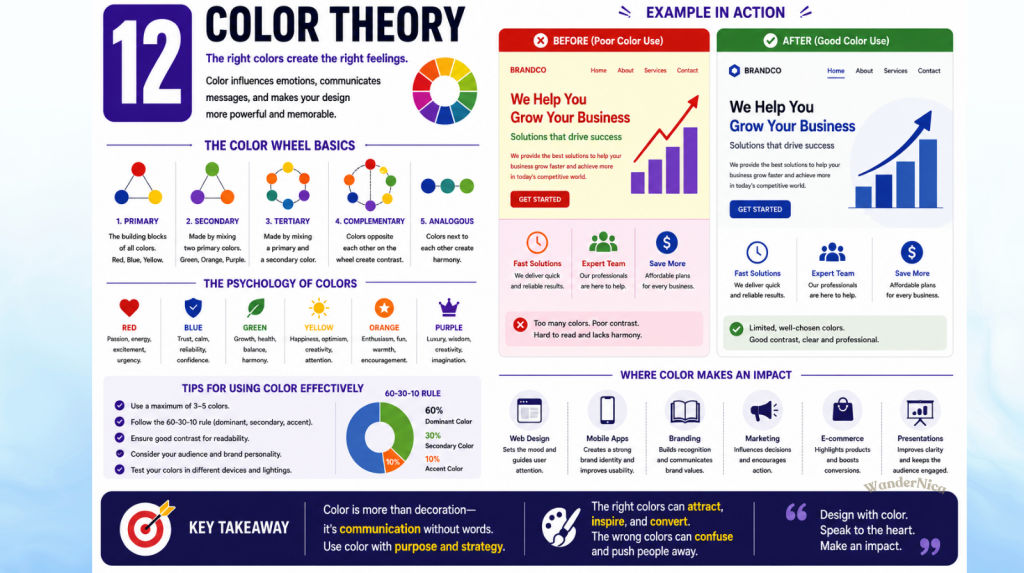
12. Color Theory
Rhythm creates visual pacing through repeated elements and patterns.
It adds energy and flow to a composition.
Why Design Principles Matter
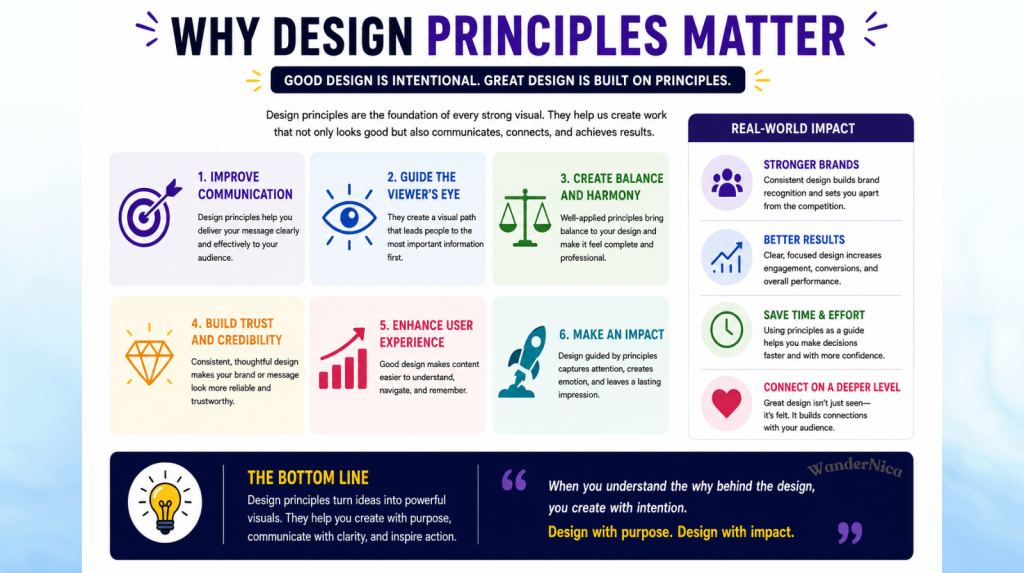
Understanding graphic design principles helps creatives:
- Build stronger visual communication
- Improve branding consistency
- Create more engaging content
- Enhance user experience
- Develop professional-looking designs
These principles are the foundation behind effective posters, websites, social media graphics, packaging, and brand identities.
Conclusion
Great design is not just about creativity — it’s about purpose, structure, and communication. Mastering these 12 graphic design principles can elevate your work and help transform simple visuals into meaningful experiences.
Whether you’re a beginner designer, content creator, freelancer, or creative entrepreneur, learning these fundamentals will always strengthen your design skills.
Keep creating, keep learning, and stay true to your creativity. ✨